
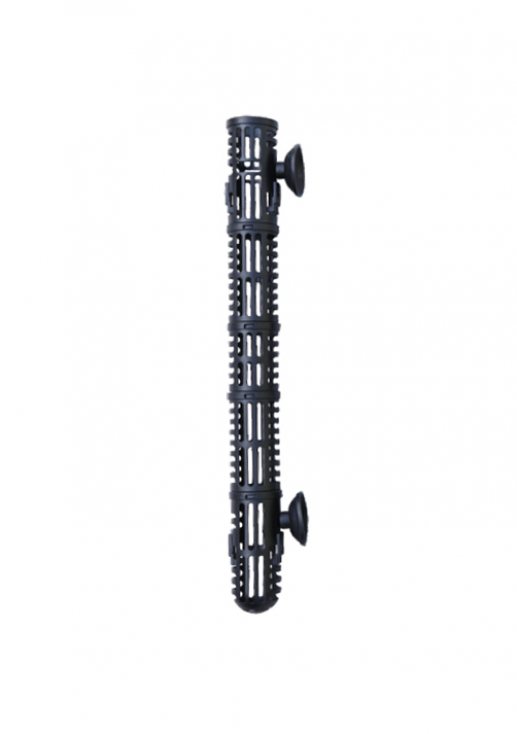
Why Use a Heater Guard?
-
Prevents Thermal Burns: Some fish—especially nocturnal species, bottom-dwellers, and slow movers like Plecos, Catfish, Discus, and Rays—like to rest right against or behind equipment. A bare heater can easily scorch their skin.
-
Impact Protection: Large, powerful, or easily startled fish (like Oscars or Cichlids) can thrash and accidentally smash a glass heater against the aquarium wall. A plastic or silicone jacket absorbs the impact.
-
Safety for Invertebrates: Snails and shrimp love grazing on the biofilm that grows on equipment. A guard ensures they don’t get cooked when the thermostat kicks on.
Key Features to Look For
| Feature | What to Check | Why it Matters |
| Material | High-quality, heat-resistant plastic o | Won’t warp or leach toxins into your water over time. |
| Slot Design | Narrow but frequent openings/slits. | Must allow excellent water flow for accurate heating, but openings must be small enough so tiny fish or tails don’t get trapped inside. |
| Suction Cups | Sturdy, secure mounting clips. | Keeps the guard firmly fixed to the glass so heavy fish can’t dislodge it. |
| Adjustable Length | Modular or extendable designs. | Many guards come in interlocking segments so you can customize the length to fit your specific heater wattage/size. |
⚠️ Critical Safety Tips
-
Do Not Block Water Flow: Ensure the guard isn’t placed in a dead zone of the tank. If water cannot flow freely through the sleeve, the water inside the tube will overheat, causing the thermostat to shut off prematurely and leaving the rest of your tank freezing.
-
Regular Cleaning: Algae and debris can build up in the slots over time, restricting water movement. Snap the guard open during your routine water changes and give it a quick scrub.
-
Check for Small Inhabitants: If you keep tiny fry or dwarf shrimp, double-check that the guard’s gaps aren’t a trapping hazard for them.
Reviews
There are no reviews yet.